Fantastic Fall Herbs
The
sun is starting to set and I cannot see as clearly as I’d like to.
I still need to water my transplants in. I’d better stop gardening,
clean up, water and get inside to write this article and fix dinner.
I can hardly tear myself away from Fall Gardening. No
matter how many times you hear it, it’s TRUE, the best time to garden in
Austin, Texas is in the fall. The mornings are cool, the whole day
can be spent outside without sweating and the plants love this time of
year. You can plant small transplants, seeds, shrubs and trees and
just about anything green can be planted now. Of course there are
exceptions and as you garden more you will learn those.
If you think ahead
you can have fresh herbs and vegetables just about all throughout the
winter. Of course, if we have some hard freezes you will have to
protect some of your plantings. I use a thin white row cover, cut
to the size of my vegetable bed. Everything else tender in the
garden is cut back and mulched and will hopefully survive any freezes.
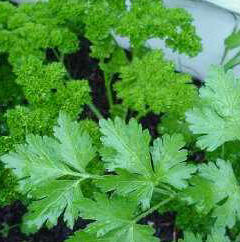
Fall is the best time to plant Parsley, Petroselinum sativum,
either curly or the flat Italian kind. For the last two years I’ve
had curly so now I’ll plant the flat. I hear flat Parsley tastes
better, we’ll see. Parsley lasts for two years, then it bolts
(goes to flower) and it’s done. Plants such as Parsley are called
Biennials. I keep one Parsley plant right outside on my deck in a
planter box, so while I’m cooking I can just step outside and snip what
I need. The other plants are in my garden. I do the same
with Basil in the summertime. Parsley seeds can be difficult to
germinate (they take quite a long time), so I recommend buying a four
inch transplant and planting it in part sun/part shade. Although I
planted an entire border in one bed with seeds and they all came up.
I use Parsley for soups, stews, tabouli, salads, etc. Fresh
Parsley is not only delicious but quite healthy and medicinal as well.
Parsley is high in Vitamin C, the leaves and root is used for urinary
tract infections and all parts of the plant are good for digestive
weakness.
Parsley, Petroselinum sativum,
either curly or the flat Italian kind. For the last two years I’ve
had curly so now I’ll plant the flat. I hear flat Parsley tastes
better, we’ll see. Parsley lasts for two years, then it bolts
(goes to flower) and it’s done. Plants such as Parsley are called
Biennials. I keep one Parsley plant right outside on my deck in a
planter box, so while I’m cooking I can just step outside and snip what
I need. The other plants are in my garden. I do the same
with Basil in the summertime. Parsley seeds can be difficult to
germinate (they take quite a long time), so I recommend buying a four
inch transplant and planting it in part sun/part shade. Although I
planted an entire border in one bed with seeds and they all came up.
I use Parsley for soups, stews, tabouli, salads, etc. Fresh
Parsley is not only delicious but quite healthy and medicinal as well.
Parsley is high in Vitamin C, the leaves and root is used for urinary
tract infections and all parts of the plant are good for digestive
weakness.
Another great herb to
plant now is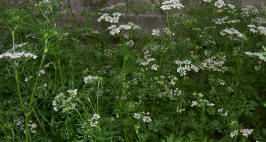 Cilantro, Coriandrum sativum. Many people love the flavor of
cilantro, and some do not. I like it in salsas, salads, with
beans, on vegetarian tacos and I even make a pesto from fresh Cilantro
leaves so you can enjoy pesto in the wintertime as you do in summer with
Basil. Cilantro is easily grown from seed, planted in a sunny
location in well -draining soil. After enjoying Cilantro all winter,
come springtime the plant will begin to bolt forming a lovely, delicate
white flower (wonderful in flower arrangements) and finally go to seed.
These seeds are Coriander seeds and can be used as a spice in chili
powder, curry powder and the ripe green seeds can be pickled and used
like capers. So interestingly, the entire aerial parts of the plant are
used for our culinary enjoyment.
Cilantro, Coriandrum sativum. Many people love the flavor of
cilantro, and some do not. I like it in salsas, salads, with
beans, on vegetarian tacos and I even make a pesto from fresh Cilantro
leaves so you can enjoy pesto in the wintertime as you do in summer with
Basil. Cilantro is easily grown from seed, planted in a sunny
location in well -draining soil. After enjoying Cilantro all winter,
come springtime the plant will begin to bolt forming a lovely, delicate
white flower (wonderful in flower arrangements) and finally go to seed.
These seeds are Coriander seeds and can be used as a spice in chili
powder, curry powder and the ripe green seeds can be pickled and used
like capers. So interestingly, the entire aerial parts of the plant are
used for our culinary enjoyment.
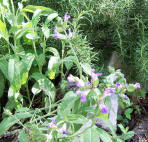 Another
favorite fall herb of mine is Borage, Borago officinalis.
Borage seeds can be planted now in full sun and will thrive through the
cool months. Borage leaves can be used as an acute treatment for
lung congestion, the flowers eaten as an anti-depressant and the oil in
the seeds are high in gamma linolenic acid, which like Evening Primrose
Oil, is helpful in the treatment of rheumatoid arthritis. The
leaves and seeds of Borage are also helpful in increasing the milk
supply of nursing mothers.
Another
favorite fall herb of mine is Borage, Borago officinalis.
Borage seeds can be planted now in full sun and will thrive through the
cool months. Borage leaves can be used as an acute treatment for
lung congestion, the flowers eaten as an anti-depressant and the oil in
the seeds are high in gamma linolenic acid, which like Evening Primrose
Oil, is helpful in the treatment of rheumatoid arthritis. The
leaves and seeds of Borage are also helpful in increasing the milk
supply of nursing mothers.
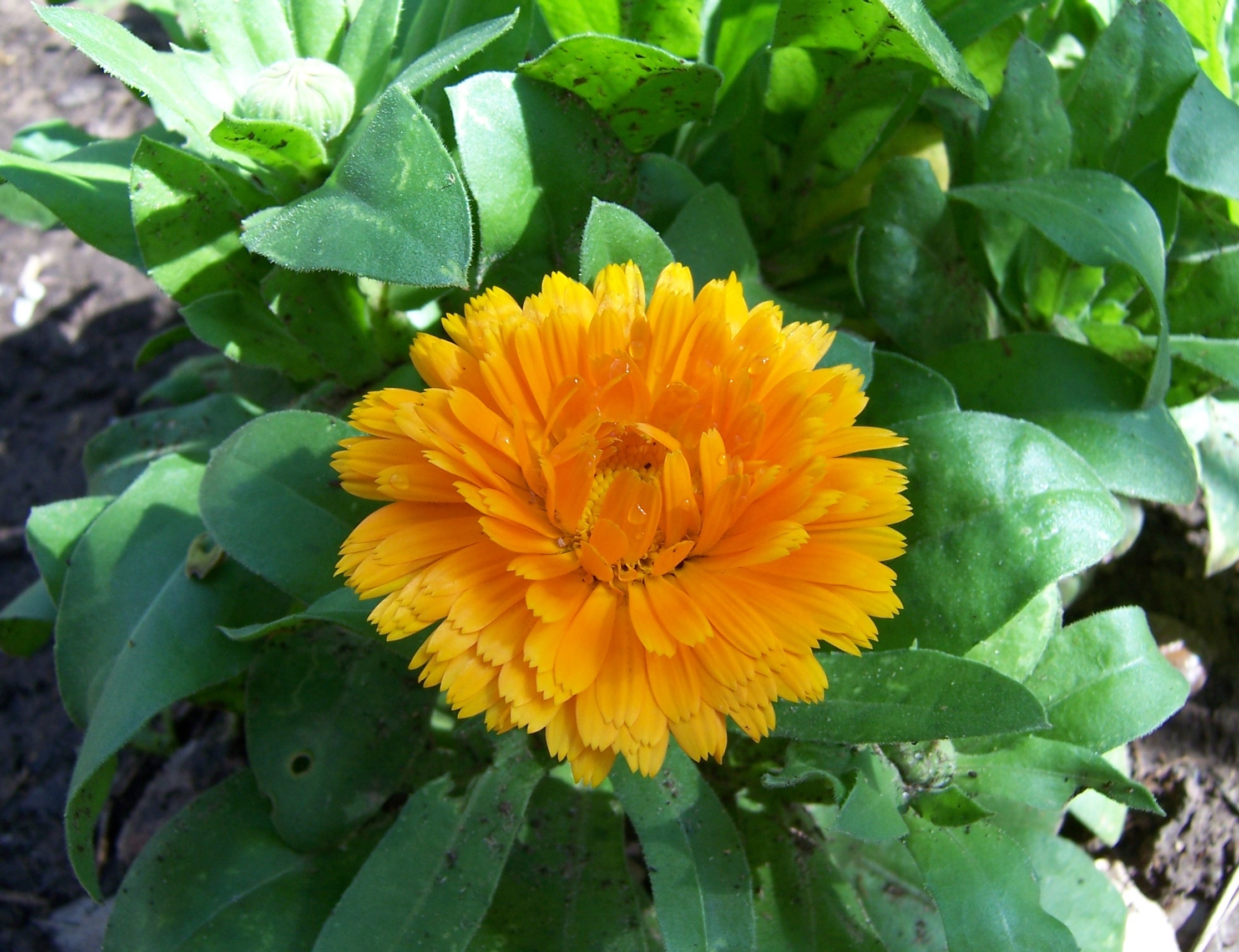
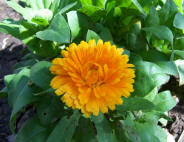 Calendula,
Calendula officinalis, is probably my favorite fall herb.
Seeds planted now, in full sun, will quickly produce plants that flower
rich, vibrant orange flowers in the late winter, early spring.
Calendula flowers are edible, act as an anti-depressant (who could stay
depressed just looking at these bright, sunny flowers) and an oil and/or
salve can be used to treat a large variety of skin disorders. Applied
externally calendula salve will effectively treat burns, soothe pain of
injuries and irritation and promote the healing of wounds, insect bites
and bruises.
Calendula,
Calendula officinalis, is probably my favorite fall herb.
Seeds planted now, in full sun, will quickly produce plants that flower
rich, vibrant orange flowers in the late winter, early spring.
Calendula flowers are edible, act as an anti-depressant (who could stay
depressed just looking at these bright, sunny flowers) and an oil and/or
salve can be used to treat a large variety of skin disorders. Applied
externally calendula salve will effectively treat burns, soothe pain of
injuries and irritation and promote the healing of wounds, insect bites
and bruises.
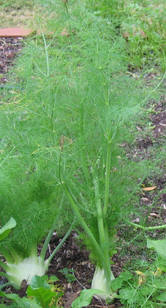 Two
other herbs best planted in the fall are Dill, Anethum
graveolens, and
Fennel, Foeniculum vulgare. Dill grows well from seed,
planted in full sun, and I usually find a transplant for Fennel. I
have both green Fennel and Bronze Fennel in my garden. Dill leaves
are used for cooking fish, in breads and the seeds are used for pickling
cucumbers. Both Dill and Fennel have excellent digestive properties,
calming flatulence, heartburn, colic and indigestion. Both these
herbs are also hosts, or the food plant, to the Eastern Black
Swallowtail caterpillar, which will eat the aerial parts of the plant
but soon grow to be outstanding butterflies in your garden. Once
these critters occupy my Dill or Fennel I just let them be and they
don’t seem to bother the rest of my bounty.
Two
other herbs best planted in the fall are Dill, Anethum
graveolens, and
Fennel, Foeniculum vulgare. Dill grows well from seed,
planted in full sun, and I usually find a transplant for Fennel. I
have both green Fennel and Bronze Fennel in my garden. Dill leaves
are used for cooking fish, in breads and the seeds are used for pickling
cucumbers. Both Dill and Fennel have excellent digestive properties,
calming flatulence, heartburn, colic and indigestion. Both these
herbs are also hosts, or the food plant, to the Eastern Black
Swallowtail caterpillar, which will eat the aerial parts of the plant
but soon grow to be outstanding butterflies in your garden. Once
these critters occupy my Dill or Fennel I just let them be and they
don’t seem to bother the rest of my bounty.
So if you have a
Texas hankerin’ to have any particular plant join your garden, now is
the best time to get them in the ground. We still have some time
before a first frost, so if you get your planting done now the root
system has a chance to establish itself and get ready to hold on for the
winter. Besides our beloved herbs, now is the time to scatter our
wildflower seeds, water them in, and sit back and enjoy springtime full
of luscious, native Texas wildflowers full of color and magic and
delights for our wildlife. Have a great season of fall planting
and before you know it we’ll be preparing our garden beds for spring.
Have fun in the garden.